
Refinery Turnaround Management Software
Software for planning, material readiness, and cost control on refinery turnarounds — built inside live events rather than adapted from construction tools.
What makes a refinery turnaround different
A refinery turnaround is not a project with a fixed scope and a long runway. It is a compressed, high-density event where scope keeps arriving until the unit is down, contractor headcount multiplies overnight, and the cost of delay clears a million dollars a day.
That combination breaks most software. Construction and cost-management tools assume scope is known before work starts and that cost reporting can follow the financial calendar. In a turnaround, scope is discovered during execution and a monthly close is three events too late.
Material readiness drives the critical path
Refining has the tightest coupling between material and schedule of any sector we work in. Long-lead exchanger bundles, valves, and specialty alloys are ordered months out, land in a yard that may hold tens of thousands of items, and get called for by a crew who cannot afford to walk twice. When an item is received but not located, the activity waits — and on a critical path activity, that is the whole event.
Scope growth is normal, not exceptional
Inspection findings add scope after the unit is down. The question is not whether additions happen but whether they are captured with attribution, priced as they land, and reflected in both the schedule and the forecast before the next morning's meeting.
Owners need an independent picture
Most of the data during a turnaround is produced by contractors reporting on their own performance. That is not a claim of bad faith — it is a structural problem. Owner teams need a source of progress, material, and cost data they control.
The failure modes are specific to this sector.
Long-lead items received but not findable
A yard holding tens of thousands of items, and no reliable answer to where a specific bundle went. The crew walks and the critical path waits.
Inspection findings arrive after the unit is down
Additions get approved in the field and priced weeks later, so the forecast lags the commitment by the length of the event.
Monthly close against a daily event
Actuals land after demobilisation. Leadership reads the overrun rather than preventing it.
Three modules. One connected platform.
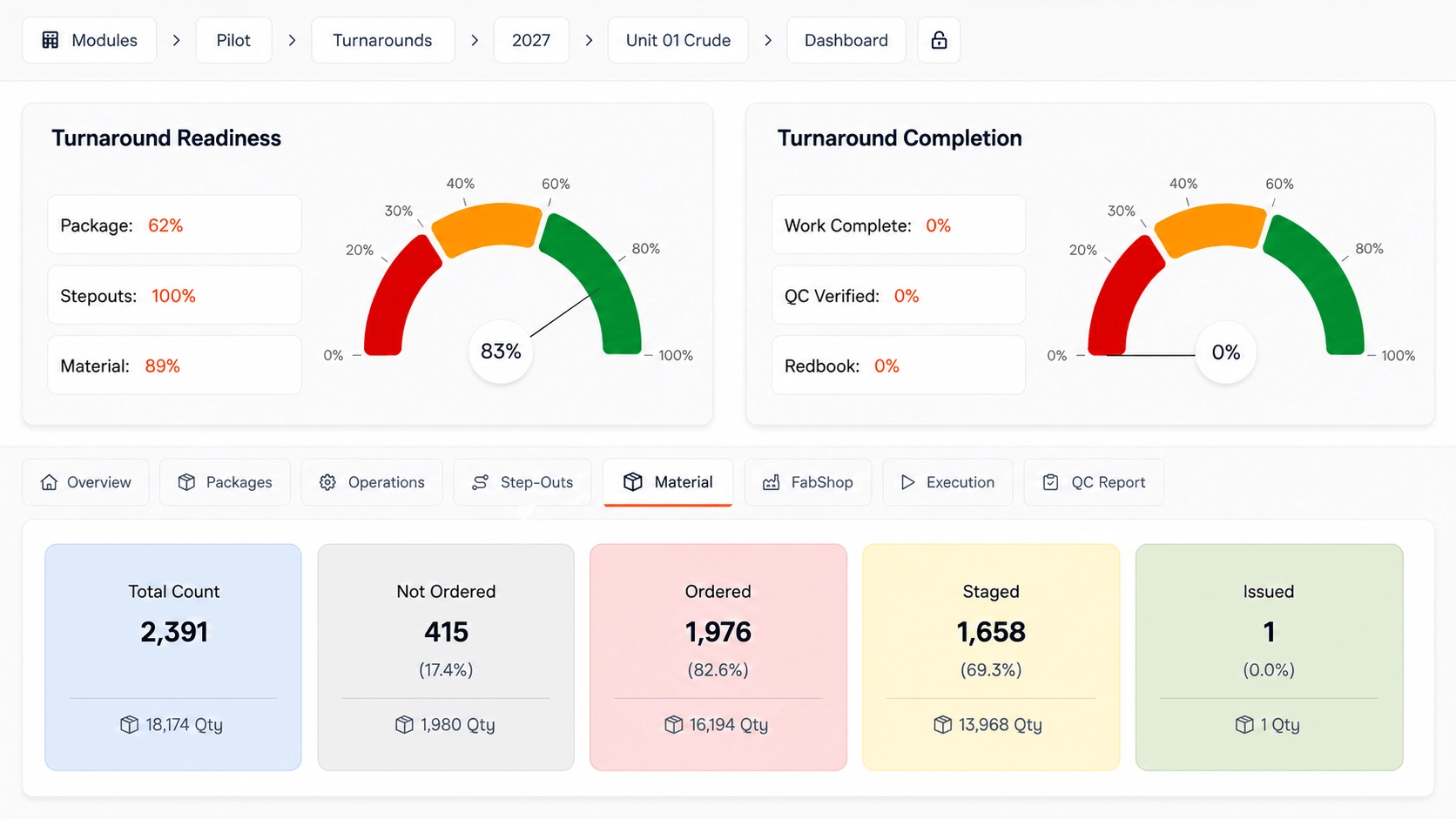
Pilot — Planning & Execution
Manage scope, work packages, sequencing, readiness, and daily field progress in one system.
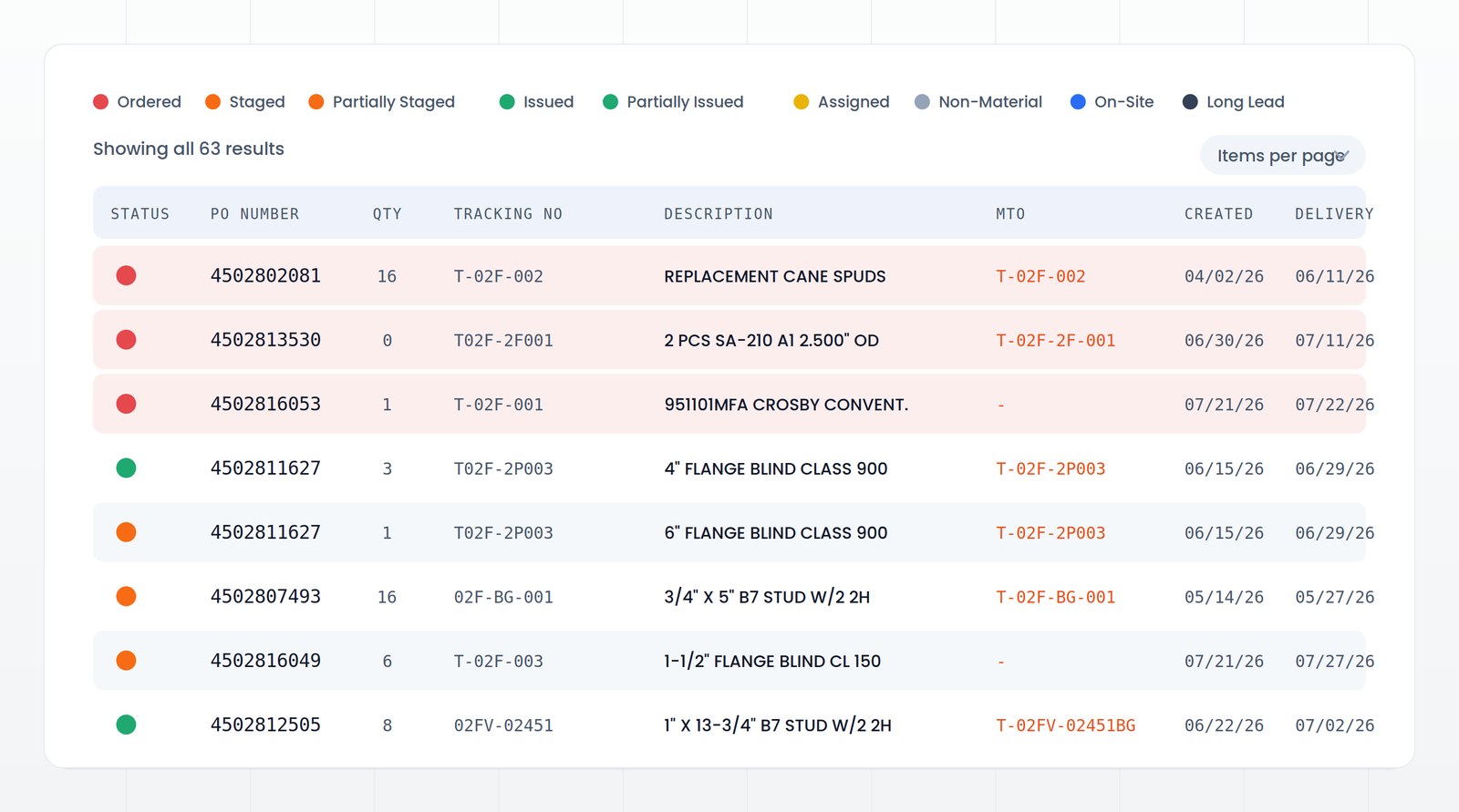
Flow — Material Management
Track material from requisition through receiving, laydown yard, staging, and job-site delivery—with shortages tied to schedule dates.
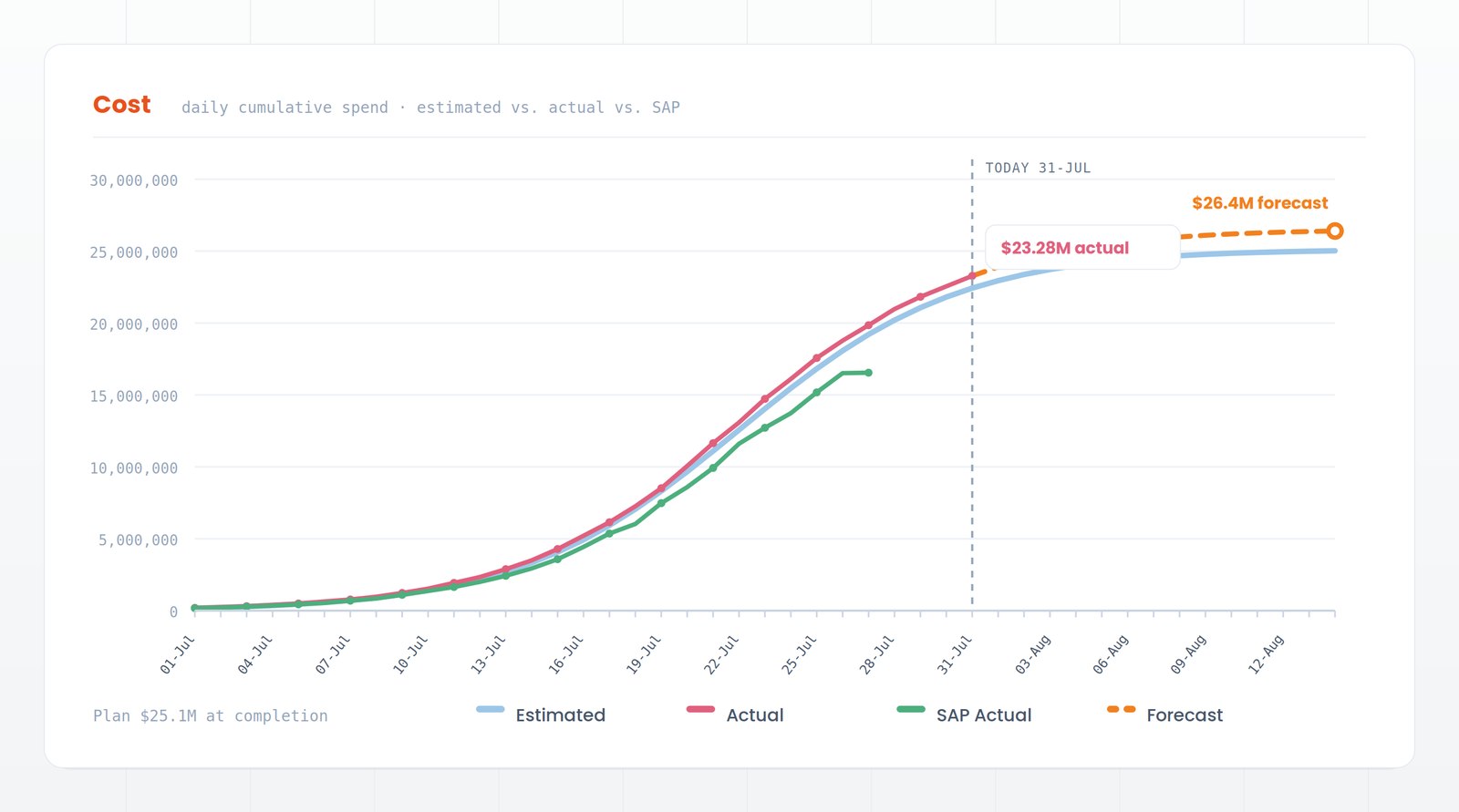
Vault — Cost Tracking
Manage commitments, accruals, changes, and a forecast that updates as the event progresses.
We work alongside what you already run.
SAP
Requisitions, purchase orders, invoices, and vendor master data.
Primavera P6
Activity dates and critical path stay authoritative in P6.
Maximo
Notifications, work orders, and equipment history.
Answers people search for.
Does EZTRAK replace Primavera P6?
No. P6 stays the authoritative schedule. EZTRAK reads activity dates so material readiness and cost can be reported against them, and writes progress back rather than duplicating the scheduling function.
Can it be deployed before a turnaround that's already planned?
Yes, and that is the usual case. Deployment runs in four phases with each phase delivering something usable, so nothing depends on a single go-live date. Access to the systems being integrated is normally the longest lead item.
Do field crews need training?
A short session and a reference card. The product was built on the assumption that field users do not use software as part of their job, so anything put in front of them has to be learnable in minutes.
How is this different from a construction project management tool?
Construction tools assume a fixed scope and a long runway, and report cost on a financial calendar. Turnarounds discover scope during execution and need a daily number. EZTRAK was built against turnaround control points rather than adapted from a project tool.
Can we start with one module?
Yes. Most clients start with material management or cost control and add the others once the first is running through an event.
See what your next turnaround could save.
Answer six questions in under two minutes and receive a conservative savings estimate based on results from live events. Find out where better visibility, control, and execution could make the greatest impact.