
Power Plant Outage Management Software
Software for planning, material readiness, and cost control on generation outages, where the window is fixed and every hour carries revenue.
What makes a generation outage different
An outage window is usually fixed before the work is fully scoped. The unit comes offline on a date set by grid commitments and comes back on a date that is not negotiable. Everything else bends around that.
The cost of delay is measured in hours
Lost generation revenue accrues by the hour, not the day. That compresses every decision cycle and makes a daily cost picture the minimum useful cadence.
Long-lead components dominate the risk
Turbine components, generator parts, and heat exchanger elements carry lead times measured in months and sometimes in quarters. A single mis-located component can consume the float in an entire outage window.
Documentation is a deliverable, not overhead
Regulatory and reliability documentation has to be produced as work happens. Reconstructing it after the fact is expensive and, in some cases, not acceptable.
The failure modes are specific to this sector.
Fixed dates, incomplete scope
The window is set before the work is fully known, so scope discovery lands against a deadline that cannot move.
One component can consume the float
Turbine and generator components with quarter-long lead times, and no room to reorder.
Records reconstructed after the fact
Documentation produced at close-out rather than as work happens.
Three modules. One connected platform.
Pilot — Planning & Execution
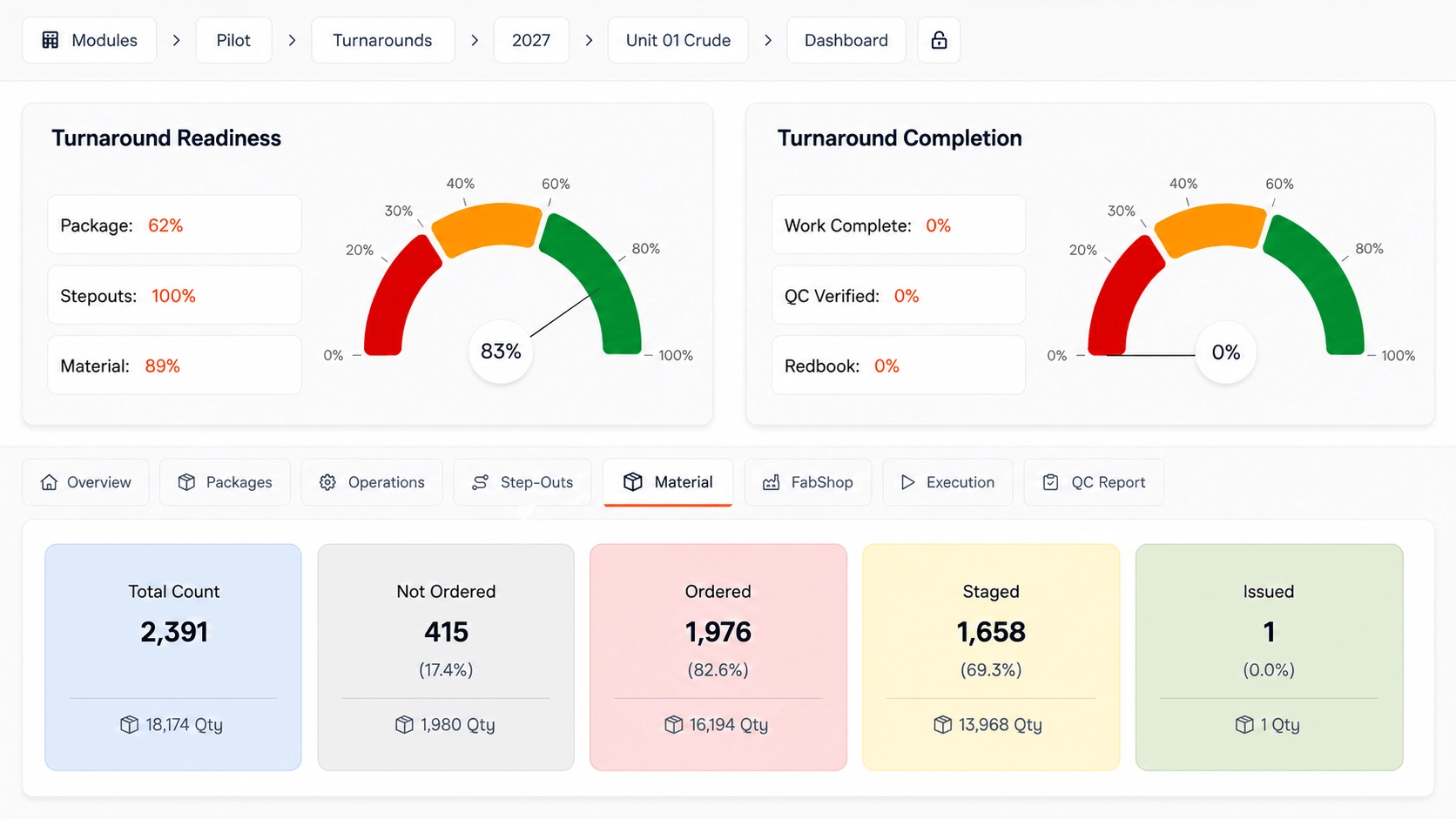
Manage scope, work packages, sequencing, readiness, and daily field progress in one system.
Flow — Material Management
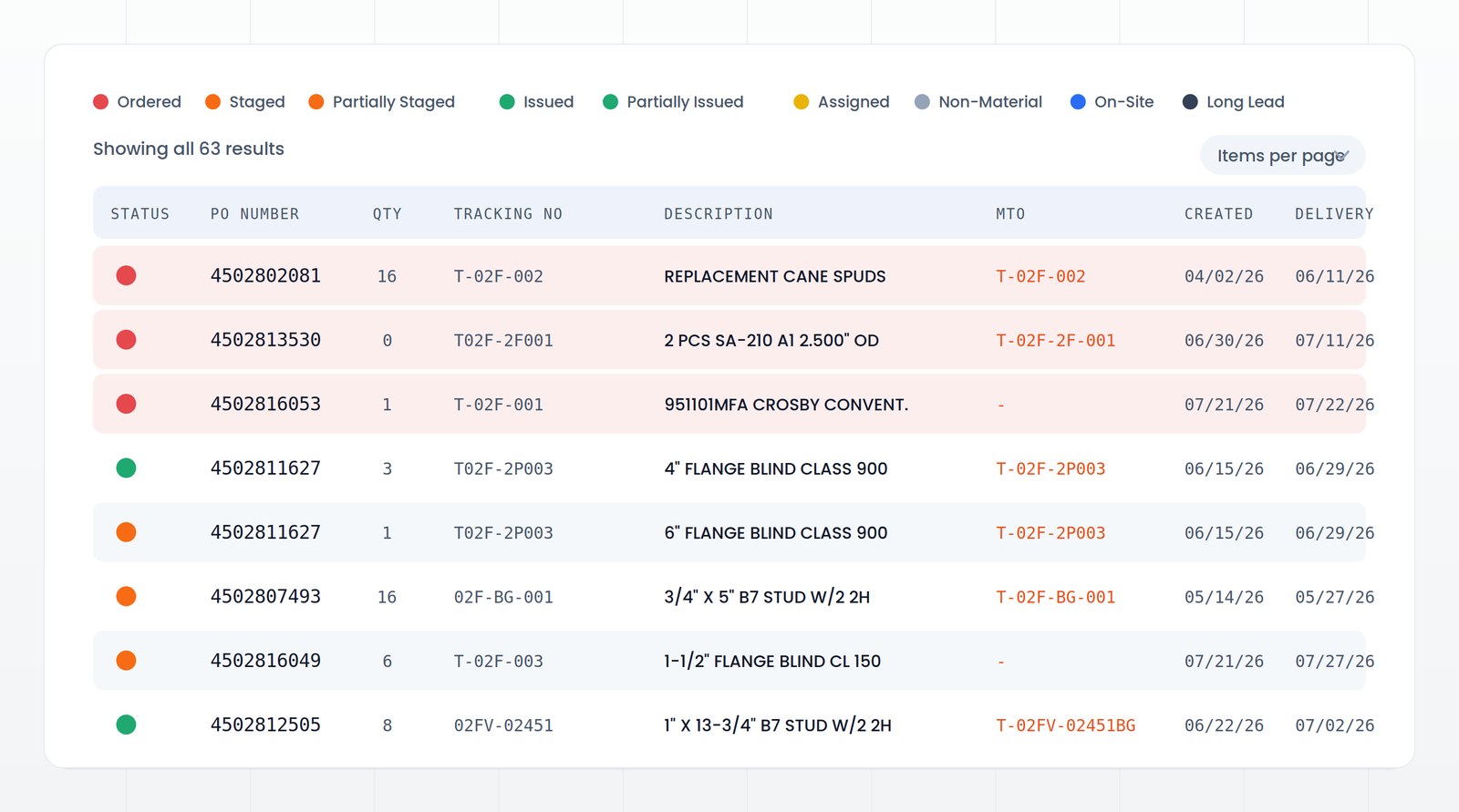
Track material from requisition through receiving, laydown yard, staging, and job-site delivery—with shortages tied to schedule dates.
Vault — Cost Tracking
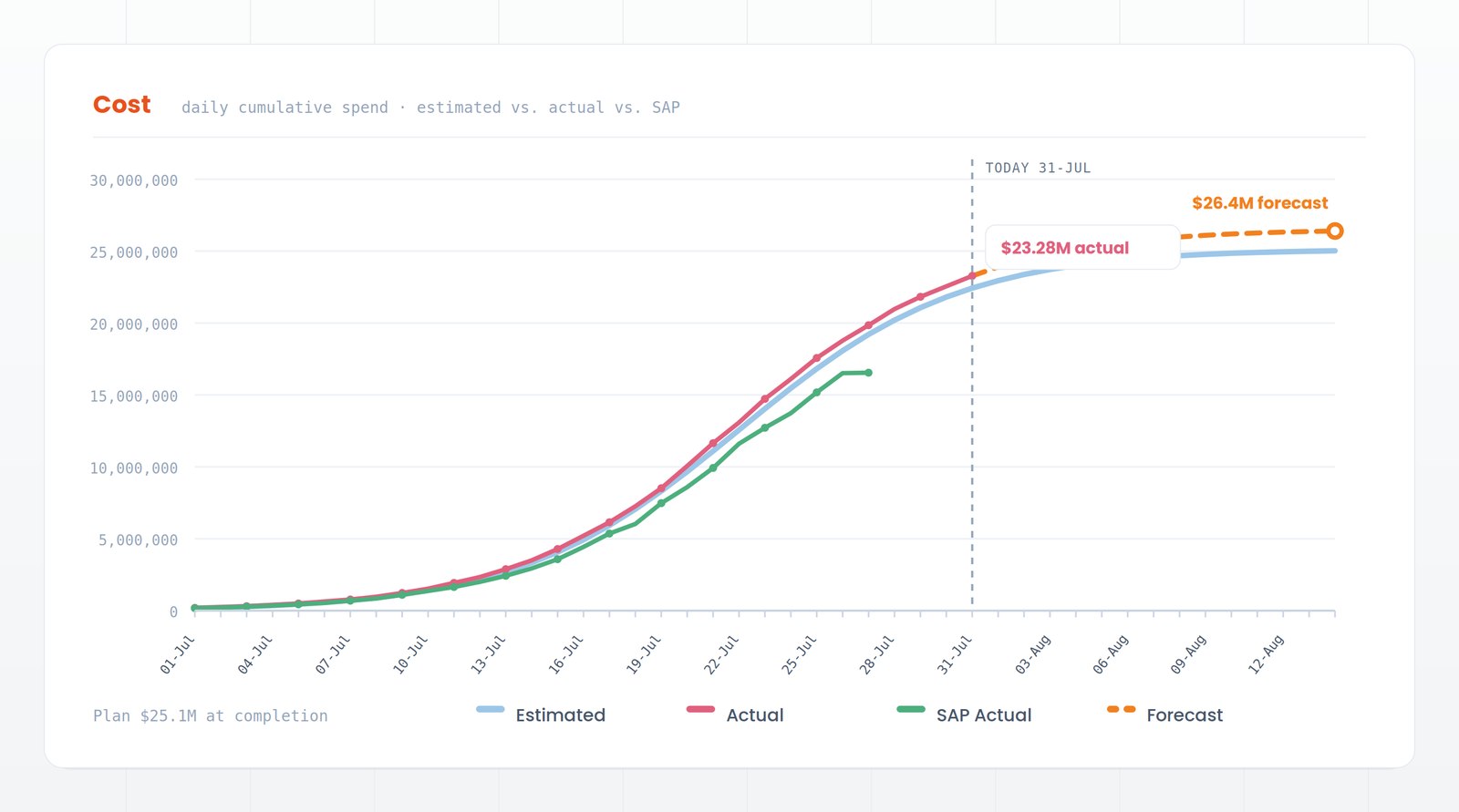
Manage commitments, accruals, changes, and a forecast that updates as the event progresses.
We work alongside what you already run.
Maximo
Notifications, work orders, and equipment history.
Primavera P6
Outage schedule, activity dates, and critical path.
SAP
Purchase orders, invoices, and vendor master data where SAP is in use.
Answers people search for.
Does this handle regulatory documentation?
Work packages carry procedures, permits, photographs, and completion records as the work happens, so the documentation is produced during the outage rather than reassembled after it.
Can it track long-lead components specifically?
Yes. Long-lead items are tracked from requisition through receipt and yard location, with shortages mapped onto the P6 schedule activities they threaten.
Does it work for both planned and forced outages?
The product is built for planned outages. Forced outage scope can be added to an existing event, but the planning workflow assumes a planned window.
How does it fit with our existing outage schedule?
P6 stays authoritative. EZTRAK reads activity dates and reports material and cost against them.
Can we start with one module?
Yes. Most clients start with one and add the others after it has been through an outage.
See what your next turnaround could save.
Answer six questions in under two minutes and receive a conservative savings estimate based on results from live events. Find out where better visibility, control, and execution could make the greatest impact.