
LNG Turnaround Management Software
Software for planning, material readiness, and cost control on liquefaction train turnarounds — where the return-to-service date is a contractual commitment, not just an operational one.
What makes an LNG turnaround different
Taking a liquefaction train offline removes a fixed share of production capacity for a known period, and that period is usually visible to counterparties long before the event starts. The return-to-service date isn't only an operational target — it sits behind cargo schedules and offtake commitments. That changes the cost of a slipped day from an internal number to an external one.
Cryogenic scope carries the longest tails
Main cryogenic heat exchangers, cold boxes, and specialty alloy components carry lead times measured in quarters rather than months. There is no expediting a replacement into a window that is already open, which makes material readiness a planning problem years out rather than weeks out.
Remote sites compress the logistics
Most LNG facilities sit on coastal or remote sites where laydown space is constrained and mobilising several thousand contractors is itself a project. Material that arrives outside its window may have nowhere to go, and a crew that walks to the wrong yard has walked a long way.
Trains are near-identical, so carryover compounds
Where a site runs multiple trains of the same design, everything learned on one applies directly to the next. Scope structure, estimates, material lists, and close-out records should transfer intact. In practice they usually don't, and each train turnaround rebuilds work that was already done.
Documentation is regulated, not optional
High-hazard classification means inspection records, permits, and completion evidence have to be produced as the work happens. Reconstructing them after demobilisation is expensive and, in some jurisdictions, not acceptable.
The failure modes are specific to this sector.
The date is contractual
Return to service sits behind cargo schedules. A slipped day is an external cost, not just an internal one.
Lead times in quarters
Cold boxes and specialty alloys cannot be expedited into a window that is already open.
Every train starts over
Identical trains rebuild the same scope, estimates, and material lists from scratch each time.
Three modules. One connected platform.
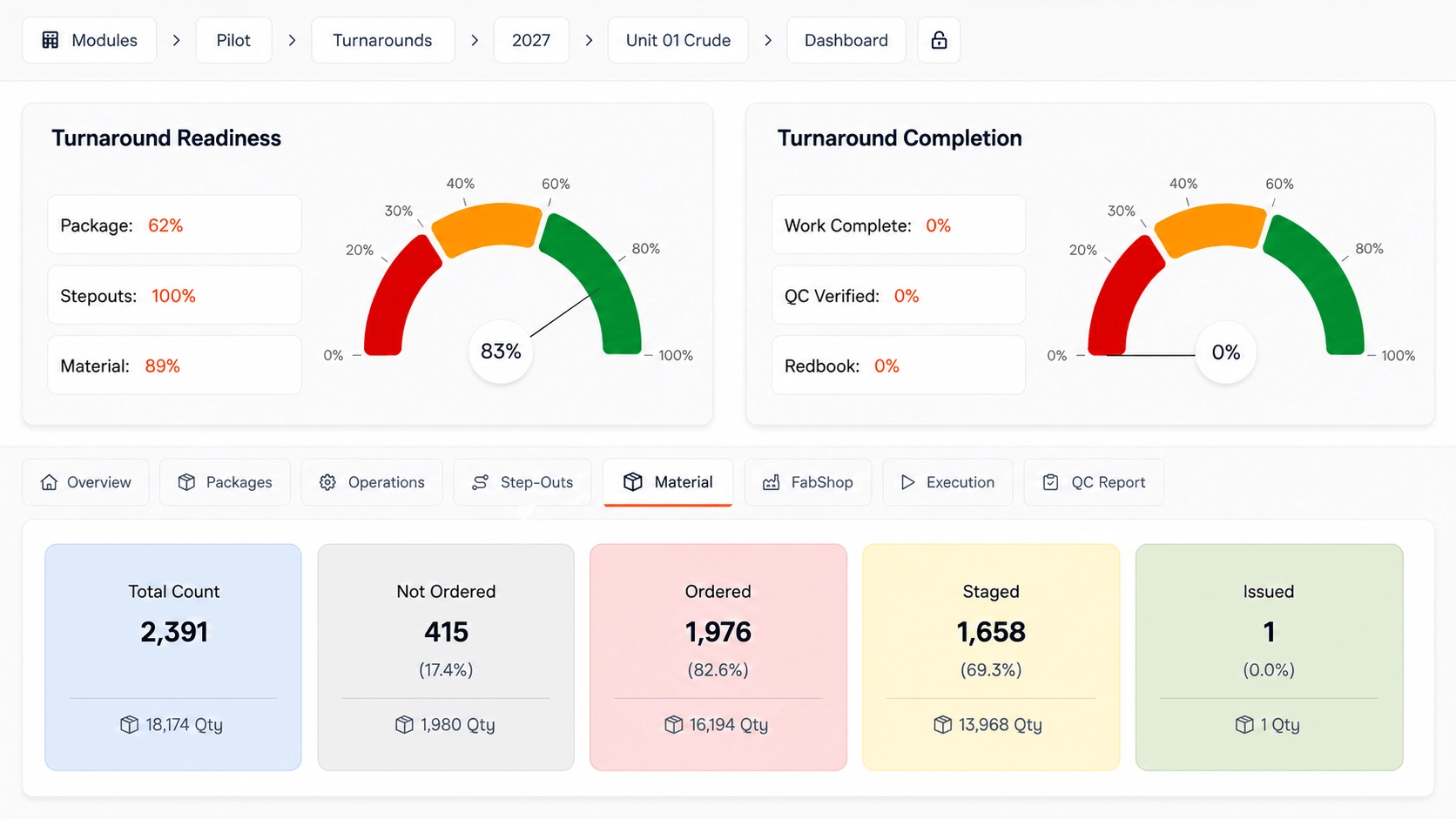
Pilot — Planning & Execution
Manage scope, work packages, sequencing, readiness, and daily field progress in one system.
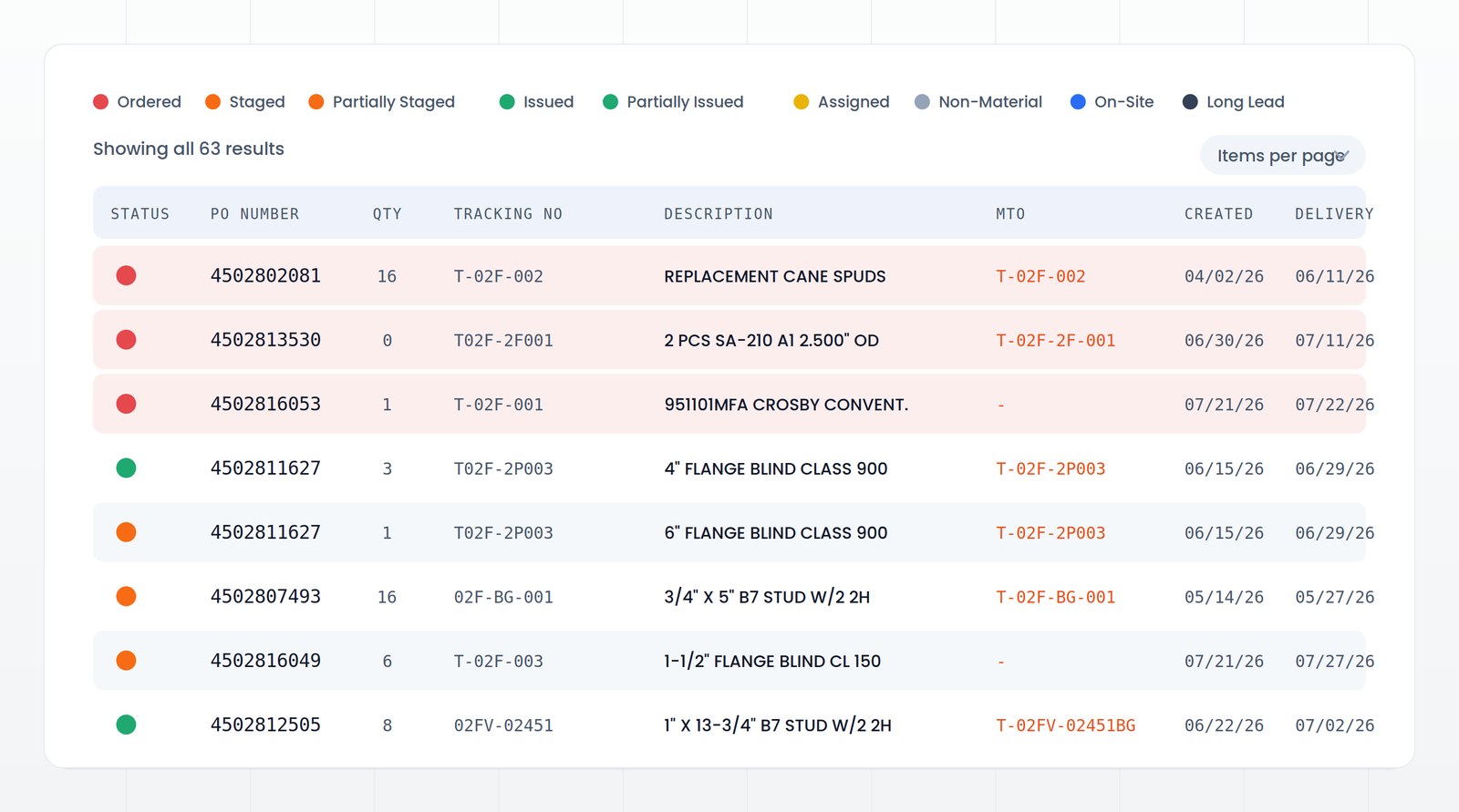
Flow — Material Management
Track material from requisition through receiving, laydown yard, staging, and job-site delivery—with shortages tied to schedule dates.
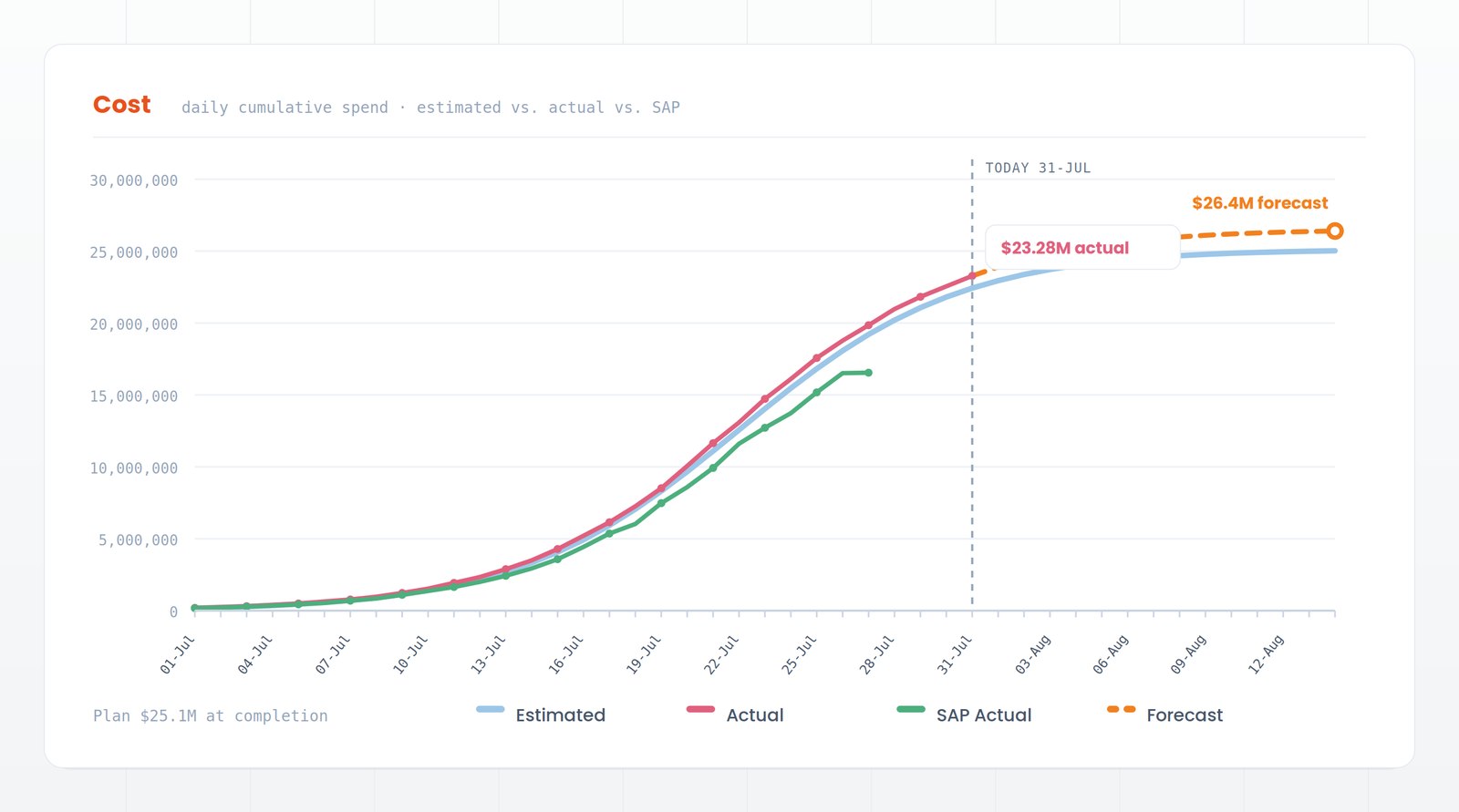
Vault — Cost Tracking
Manage commitments, accruals, changes, and a forecast that updates as the event progresses.
We work alongside what you already run.
SAP
Requisitions, purchase orders, invoices, and vendor master data.
Primavera P6
Train outage schedule, activity dates, and critical path.
Maximo
Notifications, work orders, and equipment history.
Answers people search for.
Does this handle multi-train sites?
Yes, and that is where it earns the most. Scope structure, estimates, material lists, and close-out records carry from one train turnaround to the next rather than being rebuilt.
Can it track long-lead cryogenic components?
Long-lead items are tracked from requisition through receipt and yard location, with shortages mapped onto the P6 schedule activities they threaten. On lead times measured in quarters, visibility years out is the point.
What about regulatory documentation?
Work packages carry procedures, permits, photographs, and completion records as the work happens, so evidence is produced during the event rather than reassembled after it.
Does it work on remote sites with limited connectivity?
Field entry is built for tablets and intermittent connectivity is a normal operating condition on the events we work. Confirm your specific site conditions with us before committing.
Can we start with one module?
Yes. Most clients start with material management or cost control and add the others once the first has been through an event.
See what your next turnaround could save.
Answer six questions in under two minutes and receive a conservative savings estimate based on results from live events. Find out where better visibility, control, and execution could make the greatest impact.