
Chemical Plant
Shutdown Software
Software for planning, material readiness, and cost control on chemical and petrochemical shutdowns.
What makes a chemical shutdown different
Chemical and petrochemical shutdowns tend to be shorter and more frequent than refinery turnarounds. That changes the problem: planning cycles overlap, so what carries between events matters more than what happens inside any one of them.
Carryover is the whole game
When the next shutdown is already being planned before the last one closes out, surplus material written off at close-out is bought again three months later. A close-out record that the next planner can actually use is worth more here than in any other sector.
Specialty and cleaning scope
Decontamination, cleaning, and specialty material scope carry lead times and handling requirements that general material tracking handles badly. Items need to be tracked by condition and certification, not just by count.
Shorter events punish slow reporting harder
On a ten-day shutdown, a cost picture that arrives weekly is useless. The reporting cadence has to match the event, not the finance calendar.
The failure modes are specific to this sector.
Surplus written off, then rebought
Close-out happens under time pressure and the record doesn't survive to the next event.
Condition and certification tracked on paper
Cleaning and decontamination scope carries requirements general tracking wasn't built for.
Weekly reporting on a ten-day event
By the time the number arrives, the event is over.
Three modules. One connected platform.
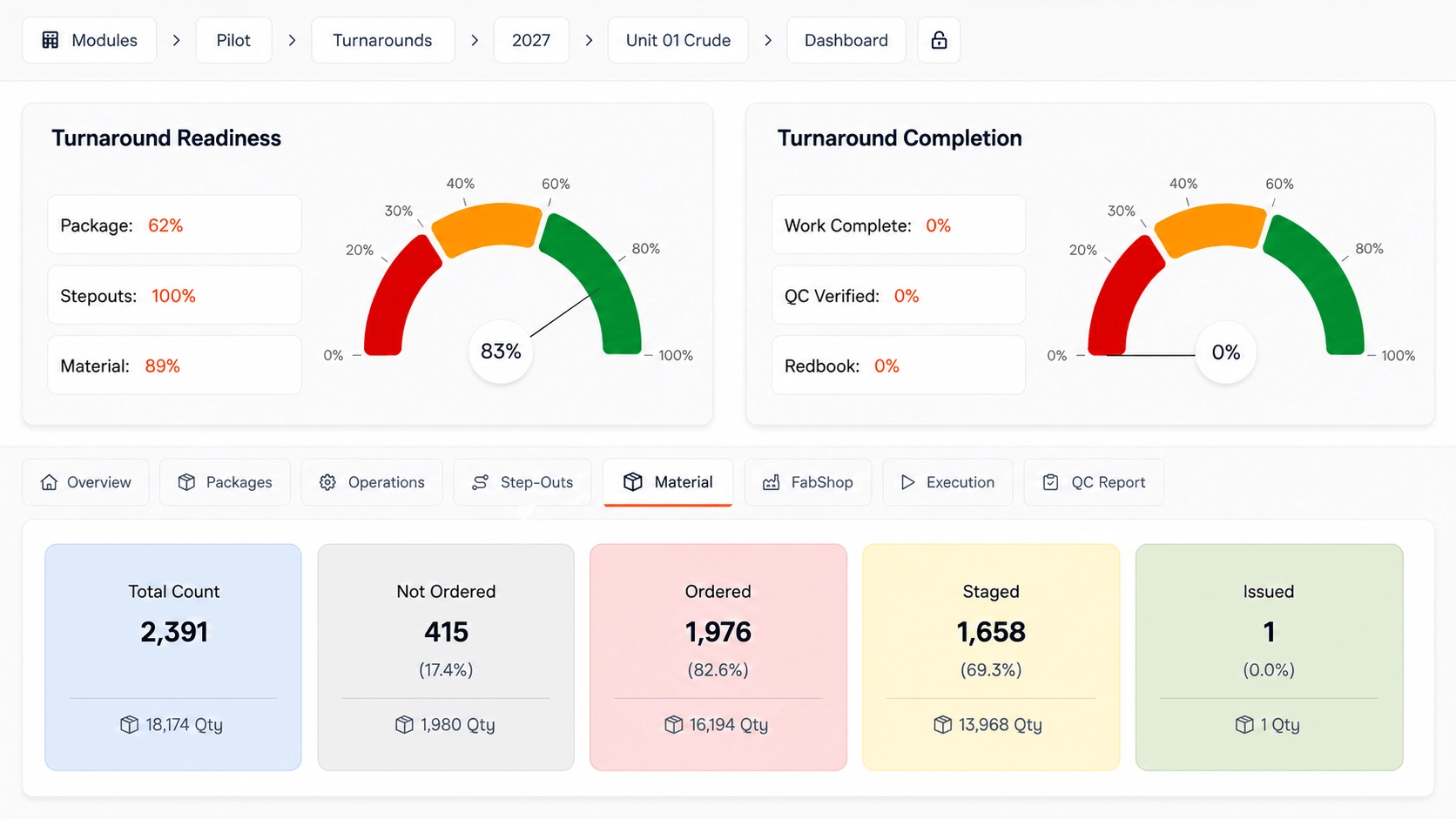
Pilot — Planning & Execution
Manage scope, work packages, sequencing, readiness, and daily field progress in one system.
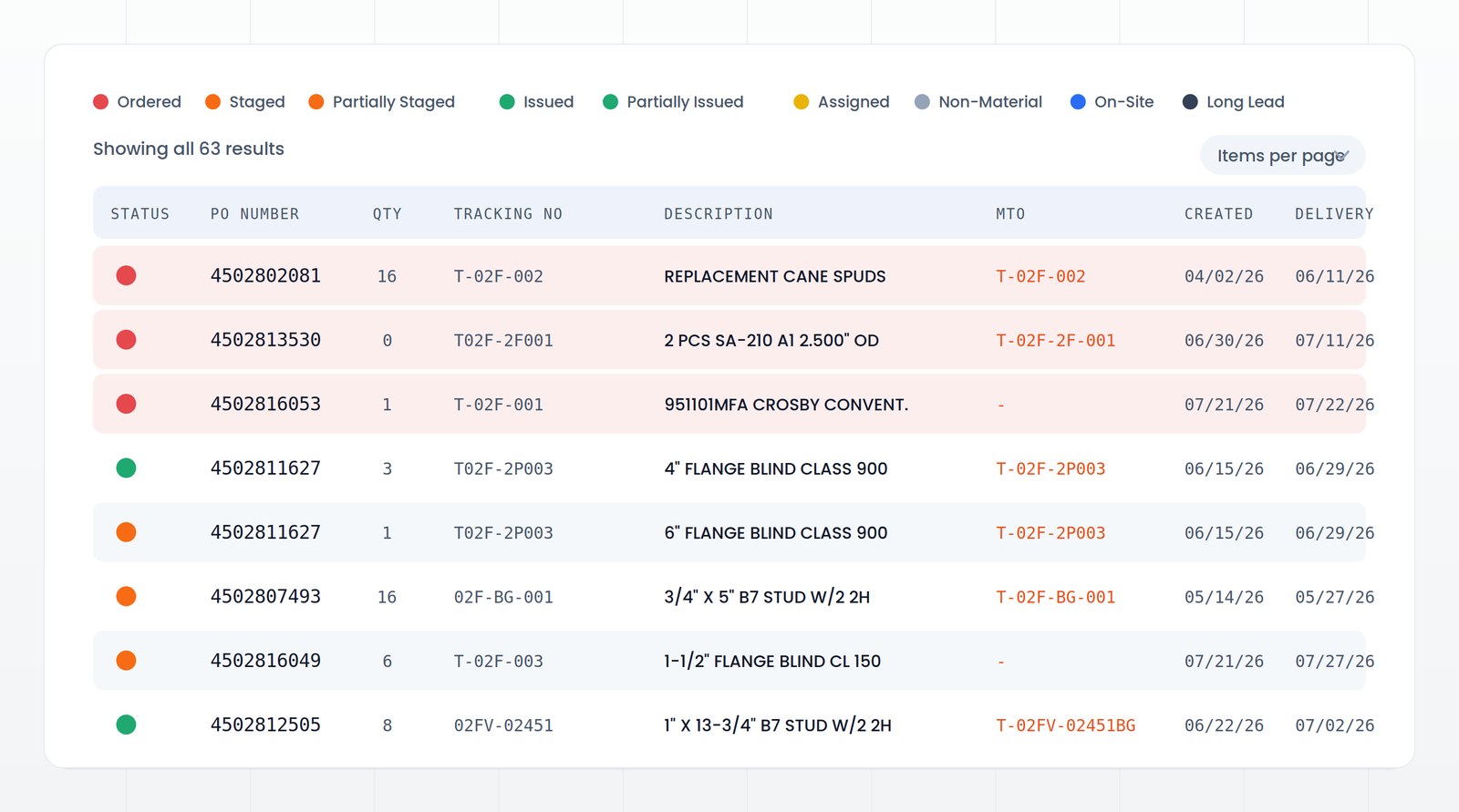
Flow — Material Management
Track material from requisition through receiving, laydown yard, staging, and job-site delivery—with shortages tied to schedule dates.
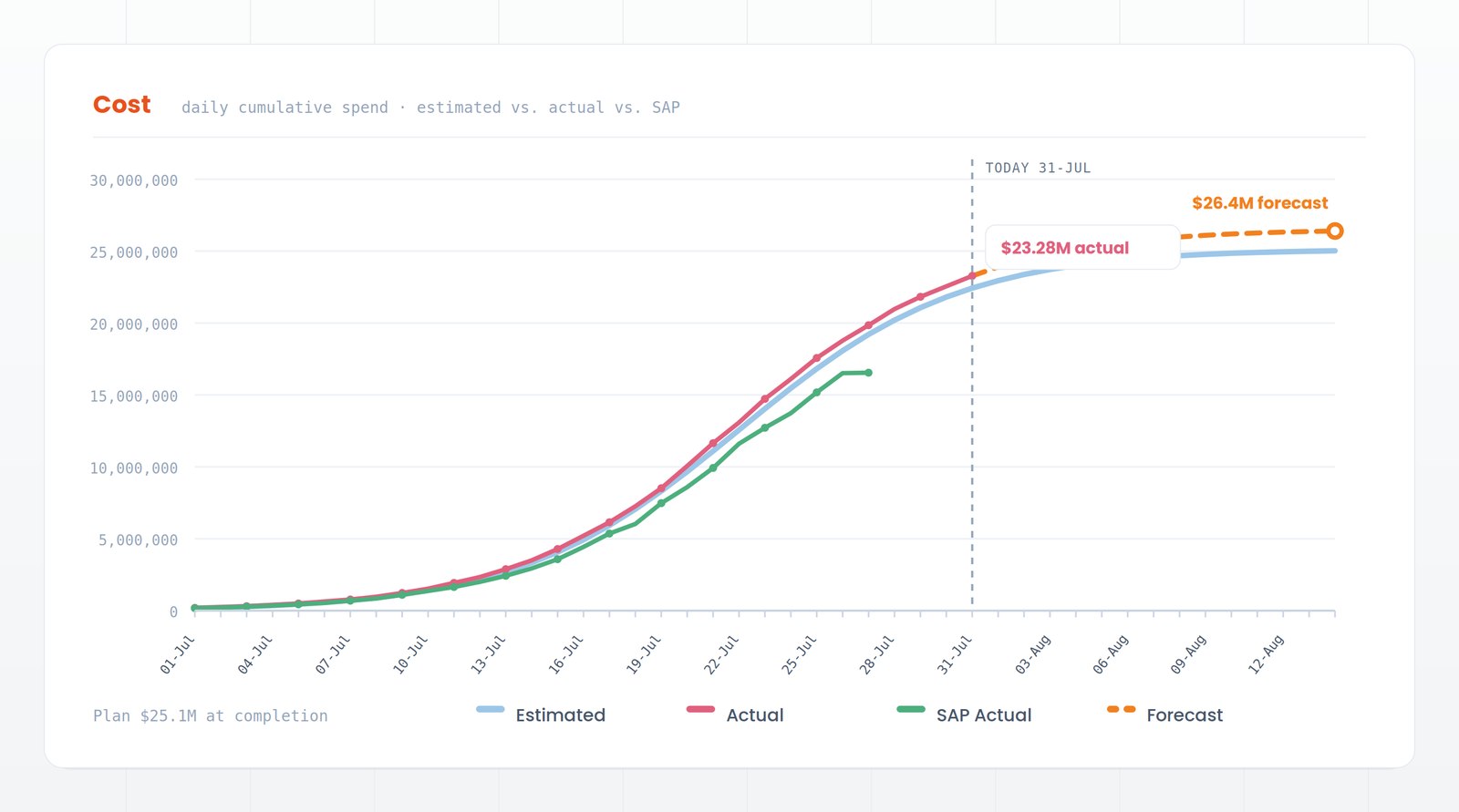
Vault — Cost Tracking
Manage commitments, accruals, changes, and a forecast that updates as the event progresses.
We work alongside what you already run.
SAP
Requisitions, purchase orders, and vendor master data.
Maximo
Notifications, work orders, and equipment history.
Primavera P6
Activity dates where P6 is in use.
Answers people search for.
Does this work for shorter shutdowns?
Yes. Shorter events are where daily reporting matters most, because a weekly cadence covers most of the event.
Can data carry between shutdowns?
That is a large part of the point. Scope, material, and cost records persist between events, so the next planning cycle starts from what actually happened rather than a blank page.
Do you handle cleaning and decontamination scope?
Scope of that type is planned and tracked in Pilot like any other work package, with material requirements flowing to Flow.
How long does deployment take?
It runs in four phases against your next event, each delivering something usable. Access to the systems being integrated is normally the longest lead item.
Can we start with one module?
Yes. Most clients start with one and add the others after it has been through an event.
See what your next turnaround could save.
Answer six questions in under two minutes and receive a conservative savings estimate based on results from live events. Find out where better visibility, control, and execution could make the greatest impact.