
Who’s typing the work steps into P6?
Planning and scheduling are two jobs, done by different people. On many sites the handoff between them is a printout and a keyboard. See how to pass work steps into P6 without retyping them.
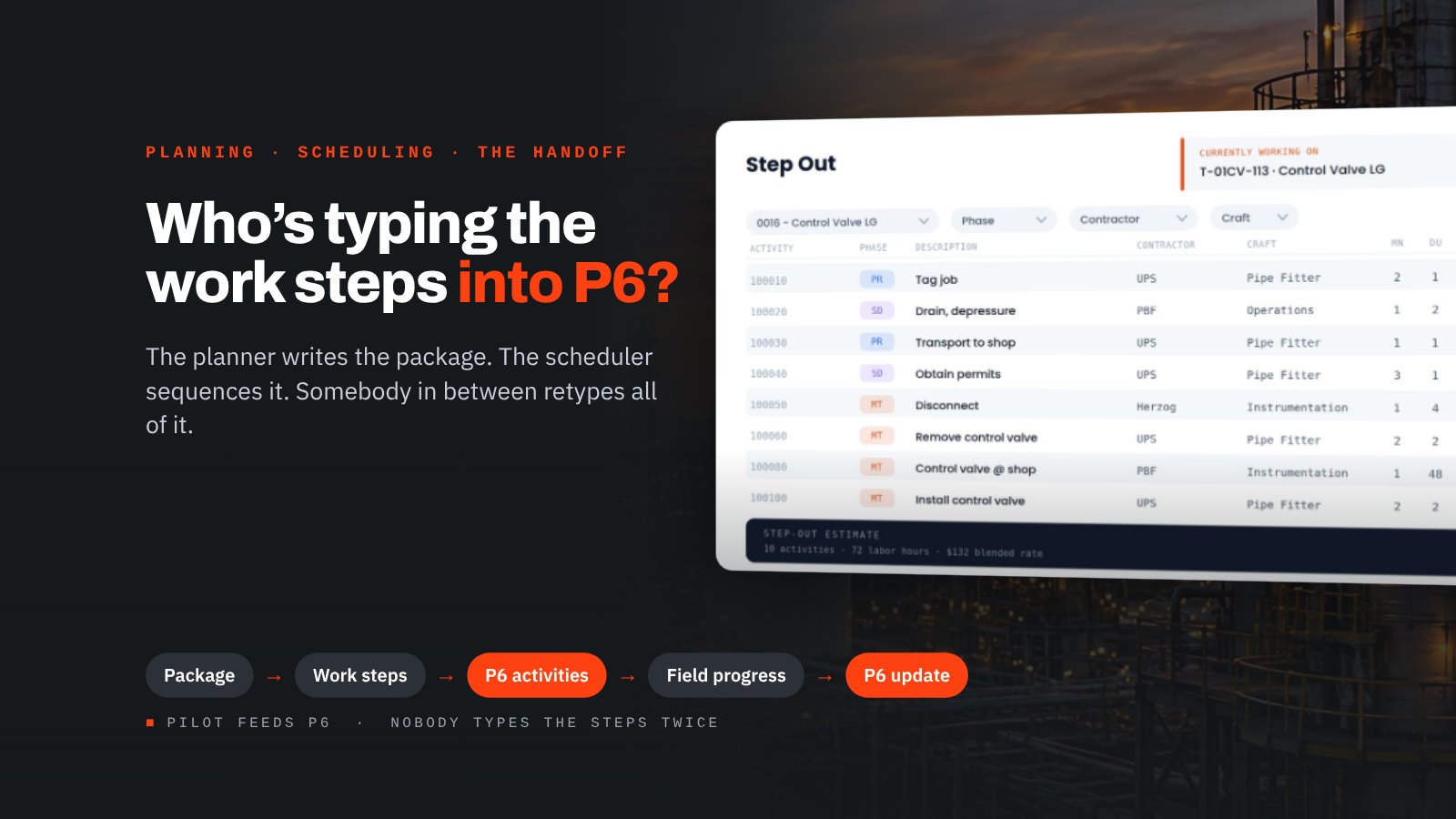
The planner builds the package: scope, steps, crew, durations, material. The scheduler builds the logic: sequence, critical path, float, resource leveling. Both are necessary. Neither replaces the other.
The problem is what happens between them.
Two jobs, one keyboard
On many sites the handoff is a printout. The scheduler reads the package and types every activity into P6 by hand: name, duration, crew, predecessor. Or the planner types them into a spreadsheet first, the scheduler imports it, and then edits half of them because the spreadsheet didn’t match the package.
An exchanger package might carry thirty or forty steps. Multiply by your package count. That’s the schedule, typed from scratch by the one person on the team whose job is to sequence, not transcribe.
The scheduler was hired to find the critical path, not to retype the plan.
The drift
The week after the schedule is built, the package changes. Scope is added, a step is split, a duration is corrected. The schedule doesn’t know. By T-30 there are two versions of the work: the one in the package and the one in P6, and they agree less every week.
Then execution starts, and the gap runs the other way. Progress is reported to the scheduler by phone, radio or a paper turnover at the end of shift. He updates P6 from what he was told. The S-curve everyone looks at in the morning meeting is a day behind and an interpretation.
One control valve, done once
Take T-01CV-113, a control valve. The planner steps it out in the package: tag the job, drain and depressure, transport to the shop, permits, disconnect, remove, the shop work, install. Ten activities, each with a contractor, a craft, a crew count, a duration and an hours figure. 72 labor hours, a $9,504 step-out estimate, before anyone opens P6.
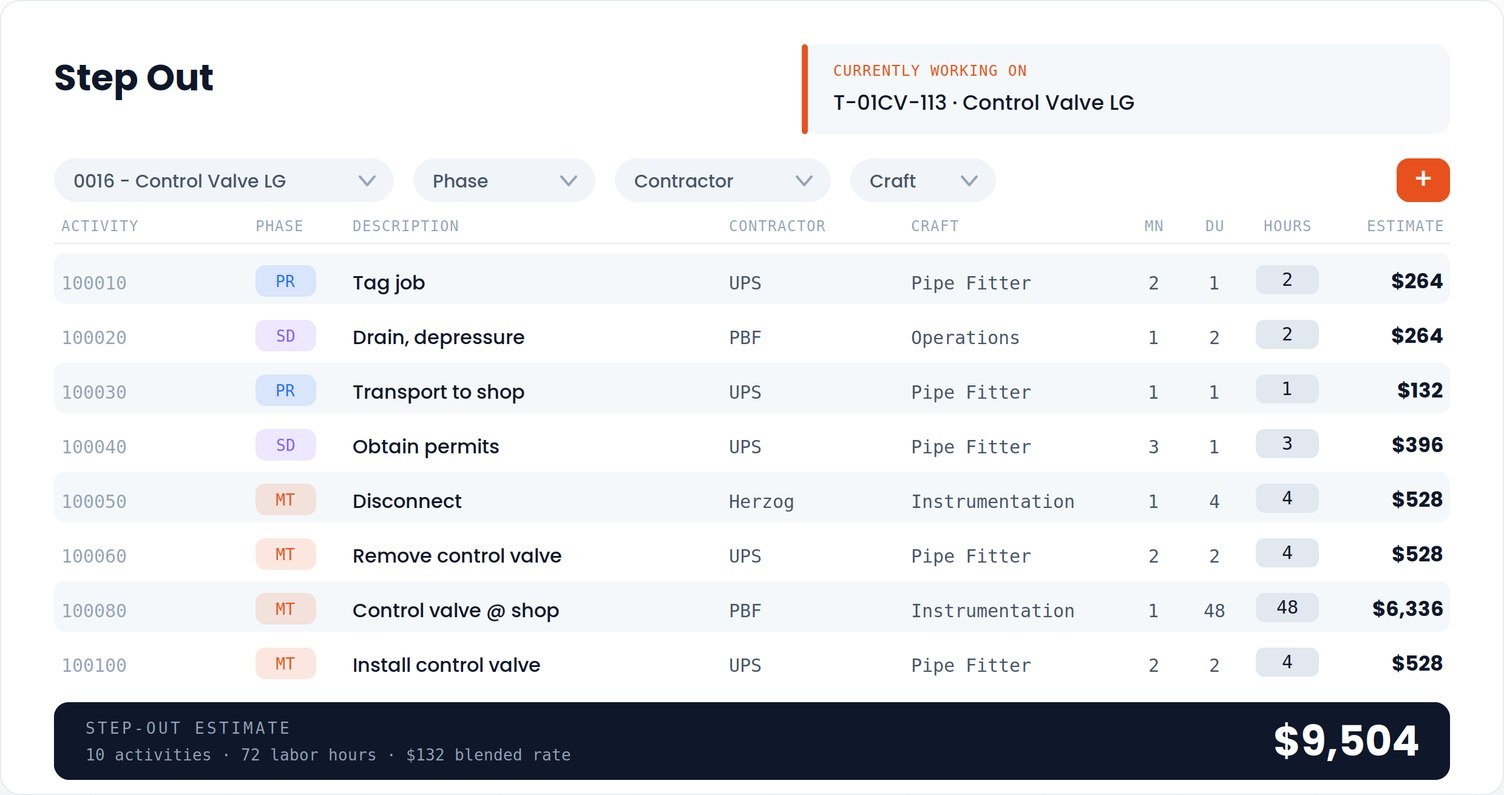
Those ten steps go to P6 as the activities, with the durations attached. The scheduler sequences them against the rest of the unit, finds the float, levels the crews. He does not type them.
In the field, the foreman closes each step on a phone as it finishes. That progress goes to P6. The schedule can be current at the end of the shift, from what happened, not from what somebody remembered.
What the handoff should look like
- Work steps written once, in the package, by the planner
- Activities created from the steps, not retyped from a printout
- Durations and crew carried over, not re-estimated by the scheduler
- Field progress captured where the work happens and sent to the schedule
- P6 stays the schedule of record. The scheduler schedules.
One product sentence: EZTRAK Pilot builds the package and passes the work steps and field progress to P6. P6 remains the schedule of record.
The longer version, planning vs scheduling and how the two should connect: Turnaround Planning vs Scheduling.
Read the previous issue: Why does turnaround software need a consultant to run it?
One word
How do the work steps get into your schedule today?
Typed, imported or connected. Tell me which and I’ll tell you what the sites in each group have in common.