Chemical plant turnarounds can be a bit like tearing apart an old engine—you expect a few surprises, but you don’t expect to toss half the parts into a scrap pile. Yet that’s exactly what happens in most STO events. Materials go missing, BOMs don’t match what’s in the field, and yards turn into miniature junkyards.
Let’s break down how to stop the waste—one decision, one process, one smarter workflow at a time.
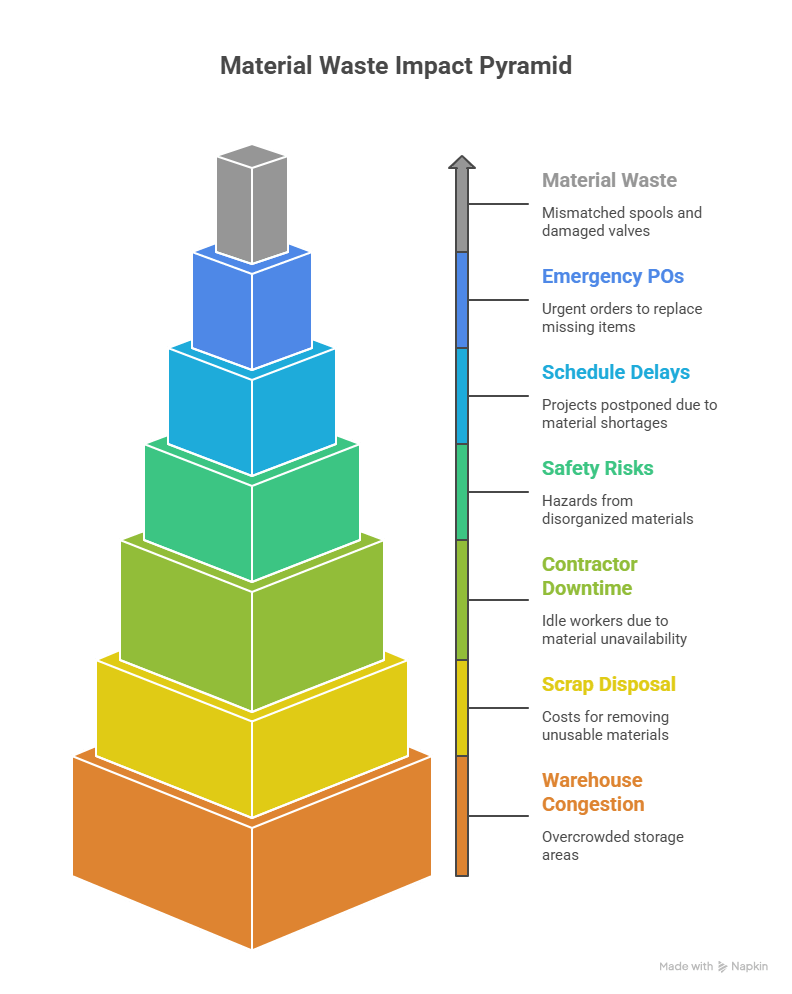
Even the most disciplined STO planner knows the feeling: a laydown yard full of mismatched spools, duplicate fittings, weather-damaged valves, and boxes of gaskets that might as well be confetti. According to the U.S. Department of Energy, poor materials management can inflate maintenance budgets by 20–30% (Source: https://www.energy.gov/). That tracks closely with what refineries report during post-event reviews.
Material waste isn’t just “extra cost.” It triggers a chain reaction:
When materials pile up, chaos piles up.
👉 If you want material efficiency baked into your turnaround DNA, start early.
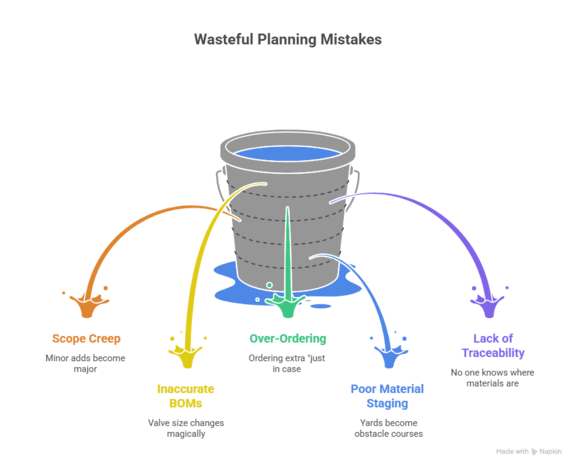
Below is a quick look at how waste begins—long before boots hit the ground:
One extra exchanger cleaning. Then a piping section. Suddenly you have 37 new BOM lines.
A valve labeled 2-inch in SAP magically becomes 3-inch in the field.
💡 Fix it: Run field-verified walkdowns and generate updated BOMs using real data.
See how EZTRAK streamlines BOM accuracy with its Turnaround Planning Module →
https://eztraksoftware.com/turnaround-planning/
This is the most common (and most costly) reflex.
Yards become obstacle courses instead of organized hubs.
When no one knows where something is, eventually someone orders another one.
| Waste Source | Real-World Impact | How to Fix It |
|---|---|---|
| Inaccurate BOMs | Wrong orders, excess scrap | Field walkdowns, digital BOM validation |
| Poor storage | Corrosion, contamination | Preservation standards, covered areas |
| No real-time tracking | Lost materials | RFID, barcoding, mobile scanning |
| Unused surplus | Budget blowouts | Daily return cycles, VMI/consignment |
| Scope changes | Duplicate orders | Change control workflows, digital approvals |
EZTRAK’s Material Management Module eliminates most of these issues through traceability + logistics control.
Learn more: https://eztraksoftware.com/services/material-management/
Create a Culture That Doesn’t Treat Materials Like “Free Candy”
Chemical plant teams often focus on labor productivity—but not on material discipline. A gasket tossed aside is rarely treated like the $40 mistake it actually is.
Use toolbox talks to explain:
Small mindset shifts save big money.
Most BOM errors disappear the moment planners walk the field with:
If something doesn’t match, update it on the spot.
EZTRAK’s readiness tracking helps identify incomplete scopes before they explode into last-minute material chaos.
See how: https://eztraksoftware.com/how-it-works/
Break materials into categories:
This reduces the “order 15 just to be safe” syndrome.
✔ Incorporate VMI or consignment stock for expensive spares to avoid dead inventory.
Implement Kitting at the Work Order Level
Instead of letting crews roam the warehouse like a hardware store:
This alone reduces unnecessary withdrawals by 20–30%.
5S isn’t a buzzword—it’s survival.
Mark zones, add color codes, set up Kanban bins for consumables.
📌 OSHA strongly recommends structured laydown zones for safer turnaround sites
https://www.osha.gov/
When materials are scanned automatically:
EZTRAK supports mobile scanning + real-time visibility, reducing material confusion during high-intensity shutdowns.
Most refineries lose tens of thousands of dollars in unused materials simply because there is no structured return process.
Create:
👉 EZTRAK’s Cost Tracking Module gives exact visibility into surplus cost recovery and scrap write-offs.
https://eztraksoftware.com/services/cost-tracking/
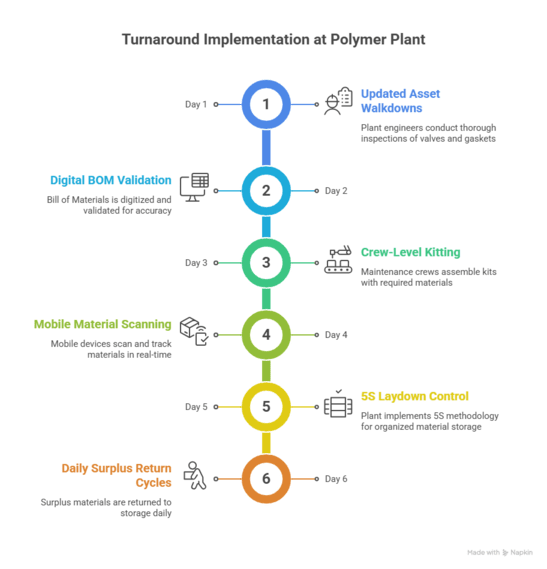
A polymer plant in the Gulf Coast realized they were burning money on valves and gaskets. They deployed:
Their surplus dropped 32%, emergency POs fell 40%, and total material cost shrank by 28%.
No magic—just discipline.
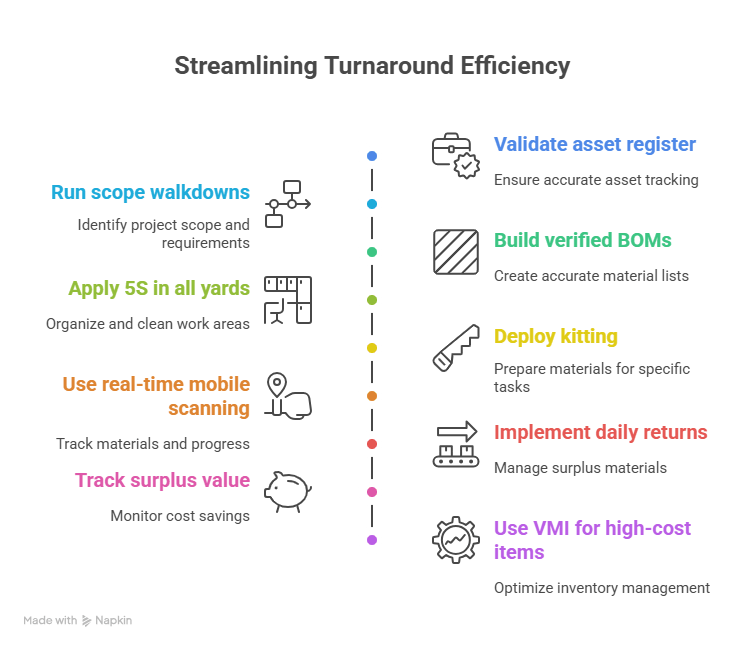
Inaccurate BOMs and over-ordering. Most waste starts during planning long before execution begins.
RFID, barcoding, and mobile apps prevent loss, reduce duplication, and enable fast returns.
It stops crews from over-picking materials and cuts surplus dramatically.
It provides real-time traceability, BOM validation, warehouse management, mobile scanning, and surplus tracking.
Absolutely. Disorganized yards, scattered materials, and cluttered work areas raise trip hazards and slow down emergency response.


