In the chemical and refining industries, plant turnarounds are among the most complex and costly maintenance events — but they’re also the most essential. A turnaround is a planned shutdown that allows engineers to inspect, clean, repair, and upgrade key systems that keep operations safe and efficient. The challenge lies in doing all of this while maintaining a tight balance between safety, schedule, and cost — three pillars that determine whether a shutdown becomes a success story or a financial nightmare.
Modern facilities are increasingly turning to digital turnaround management tools like EZTrak Software, which bring real-time visibility, predictive scheduling, and compliance tracking into one central platform. These innovations are helping plants reduce downtime, cut expenses, and achieve “zero-incident” goals while meeting strict environmental and regulatory standards.
This guide breaks down how turnaround professionals can plan and execute shutdowns that deliver measurable results — exploring best practices for safety management, cost control, contractor coordination, and technological integration that define today’s high-performance industrial operations.
Chemical plant turnarounds aren’t your average tune-up they’re industrial marathons. Imagine halting a refinery or polymer plant that’s been running nonstop for years just to dissect its every component. That’s a turnaround. It’s about precision timing, budget control, and above all, safety.
These plant turnaround management operations are scheduled every few years to inspect, repair, and sometimes replace critical equipment before it fails. The process might involve thousands of contractors, cranes, scaffolding towers, and a race against the clock.
When done right, a turnaround boosts production efficiency and regulatory compliance. When done wrong — well, it can bleed millions per day in lost revenue and risk human lives. That’s why balancing safety, schedule, and cost isn’t just a slogan it’s survival.
🔧 Looking to simplify your next turnaround?
Discover how EZTrak Software helps chemical and refinery plants manage complex turnarounds with precision scheduling, real-time dashboards, and integrated safety tracking.
The smartest plants start turnaround project planning 12–18 months ahead.
A well-defined Project Execution Plan (PEP) outlines scope, budget, and resources before anyone sets foot on-site.
| Planning Phase | Objective | Tools Used |
|---|---|---|
| Scope Definition | Identify systems and equipment requiring work | EZTRAK Software, CMMS, inspection reports |
| Budget Allocation | Estimate material, labor, and logistics costs | EZTRAK Software, EVM & cost forecasting tools |
| Schedule Creation | Define work breakdown structure | EZTRAK Software, Primavera P6, MS Project |
| Safety Strategy | Align teams with compliance procedures | EZTRAK Software, HAZOP & safety audits |
With EZTrak Software, you can centralize turnaround planning, automate cost tracking, and ensure full compliance — all from one powerful dashboard.
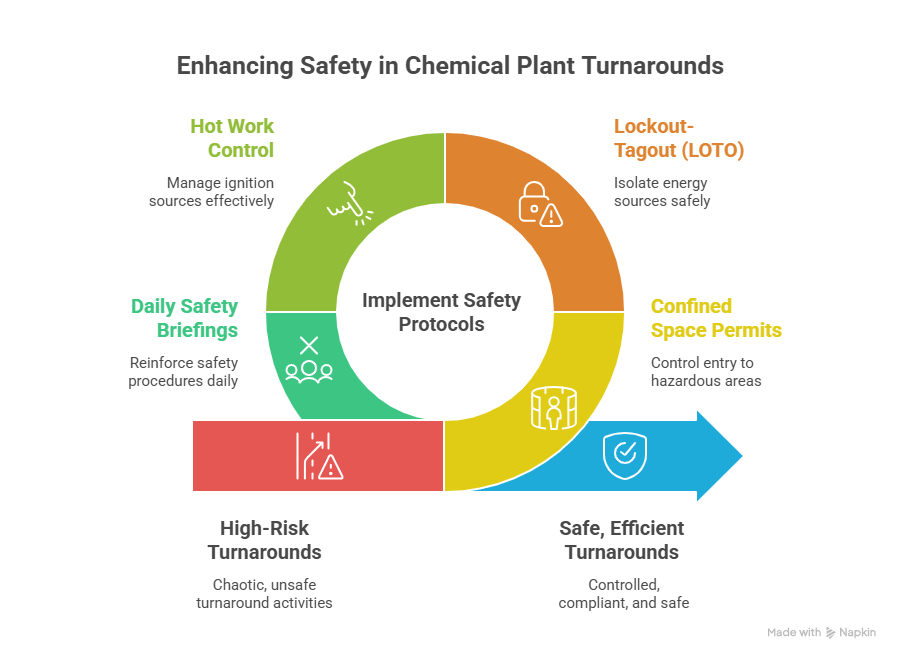
No metric matters more than safety management in chemical plants. During turnarounds, risk multiplies: open systems, flammable gases, confined spaces — all in one chaotic symphony of activity.
Before the first wrench turns, safety leaders enforce:
Accidents during TAR projects don’t just hurt morale — they halt schedules, spike costs, and damage reputation. Many global plants adopt OSHA’s Process Safety Management (PSM) guidelines as their backbone, ensuring that even temporary crews follow the same life-saving protocols.
Time equals money — literally. Every hour of downtime costs thousands.
That’s why turnaround scheduling requires a mix of realism and flexibility.
Smart scheduling tactics include:
Software like Eztrak helps visualize thousands of interconnected tasks. Still, the human factor remains leadership must anticipate scope creep, weather delays, and vendor hiccups.
When storms hit the Gulf Coast, one refinery famously rescheduled inspection crews to night shifts, shaving two days off the delay. That’s turnaround agility in action.
Controlling turnaround costs is part science, part poker game.
Turnaround cost control starts during planning but lives and dies during execution.
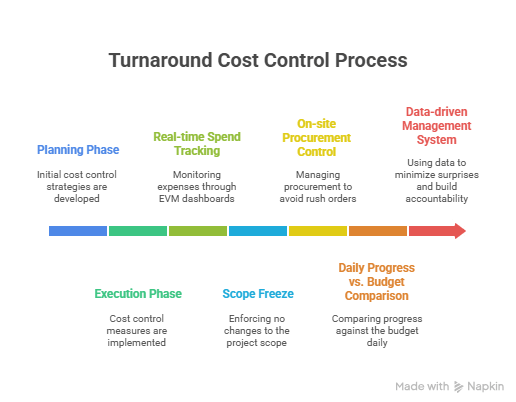
Here’s how seasoned managers keep expenses from exploding:
Remember: overspending on scaffolding, rentals, and overtime is common — not because of waste, but due to reactive management. A data-driven turnaround management system minimizes surprises and builds accountability at every level.
During a turnaround, contractors outnumber permanent staff five to one. The challenge? Herding that army.
Best practices include:
Large plants use contractor management software integrated with CMMS for seamless handoffs. Coordination ensures no two crews occupy the same system or scaffold simultaneously — preventing accidents and idle time alike.
Every turnaround carries risks — from environmental compliance issues to inspection findings that derail timelines.
Proactive managers use risk-based inspection (RBI) models to identify vulnerabilities before they become disasters.
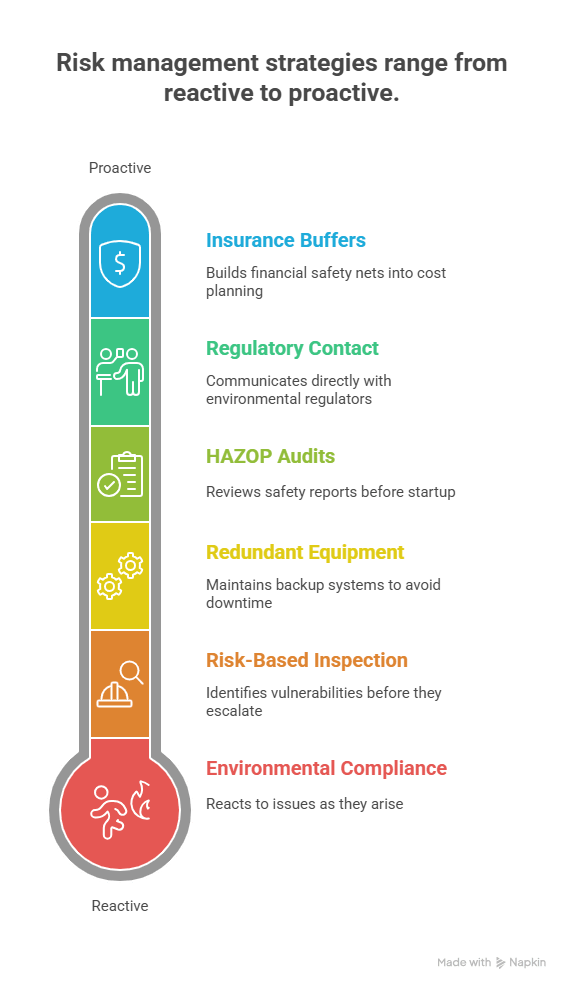
Key risk controls:
Failure to comply with emission and waste disposal regulations can cost more than any equipment repair. Smart leaders treat compliance as a profit protection tool — not a bureaucratic chore.
Welcome to the era of digital turnarounds.
New tools — from drones inspecting columns to AI-driven predictive maintenance systems — are revolutionizing efficiency.
Example innovations:
Companies embracing this tech report 15–25% shorter turnaround durations, according to a McKinsey Industry Study.
Once the plant roars back to life, the work isn’t done.
Post-turnaround reviews help benchmark performance, celebrate wins, and expose weak points.
| Metric | Target | Post-TAR Result |
|---|---|---|
| Safety Incidents | Zero | ✅ Achieved |
| Schedule Adherence | 100% | 97% (minor delay due to rain) |
| Budget Variance | <5% | 3.4% |
| Equipment Reliability | +10% | +12% improvement |
The most successful teams conduct cold-eye reviews — independent evaluations that cut through internal bias. The lessons learned become gold for the next cycle.
Typically 30–90 days, depending on plant complexity and work scope.
Anywhere from $5 million to over $100 million for major refinery shutdowns.
Safety incidents and equipment failures during start-up.
AI can forecast delays, optimize manpower, and predict mechanical issues.


