For decades, refinery turnarounds followed the same unwritten rule: shut it down, throw people at the work, stretch the schedule when things go sideways, and sort out the lessons later—if there’s time. That playbook doesn’t survive today’s margins, regulatory pressure, or workforce reality.
Modernizing refinery turnarounds isn’t about dashboards or buzzwords. It’s about fixing the quiet failures that veterans recognize instantly but rarely document. The kind that don’t show up in post-mortems until the budget’s gone and everyone’s moved on.
This article isn’t theoretical. It’s shaped by what goes wrong on site, what actually helps, and where modernization earns its keep.
A refinery turnaround is controlled disruption. You intentionally stop a revenue-generating asset, tear into its most vulnerable systems, and rebuild trust in the equipment before restarting.
Why Turnarounds Exist at All
Without periodic shutdowns, refineries drift toward failure—slowly, then all at once.
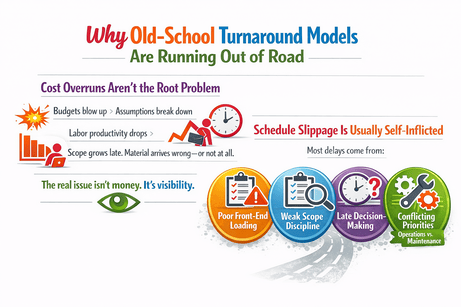
Budgets blow up because assumptions break down. Labor productivity drops. Scope grows late. Material arrives wrong—or not at all.
The real issue isn’t money. It’s visibility.
Most delays don’t come from equipment surprises. They come from:
By the time leadership reacts, the critical path is already compromised.
No matter the geography, the patterns repeat:
The phrase “we’ll figure it out during execution” is usually the first warning sign.
From Experience-Based to Evidence-Based Decisions
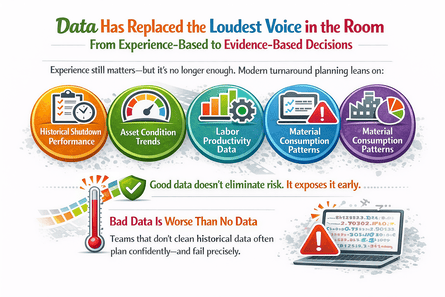
Experience still matters—but it’s no longer enough. Modern turnaround planning leans on:
Good data doesn’t eliminate risk. It exposes it early.
Bad Data Is Worse Than No Data
Teams that don’t clean historical data often plan confidently—and fail precisely.
Front-end loading (FEL) isn’t paperwork. It’s commitment.
What Strong FEL Looks Like
This is where tools like structured turnaround planning platforms actually add value, not during execution chaos.
Late scope doesn’t just add work. It:
Modern teams track scope changes digitally so leaders see consequences immediately—not weeks later.
Predictive maintenance allows teams to focus effort where failure risk is highest—not where anxiety is loudest.
According to the U.S. Department of Energy, predictive approaches can reduce maintenance costs by up to 30% while improving uptime
Quote
Predictive Maintenance Technologies… attempts to detect the onset of a degradation mechanism with the goal of correcting that degradation prior to significant deterioration of the component or equipment.” https://www1.eere.energy.gov/femp/pdfs/om_6.pdf
That matters during a shutdown.
The Skilled Labor Gap Is No Longer Theoretical
Retirements, contractor churn, and specialization mean:
Digital workflows help—but only if crews trust them.
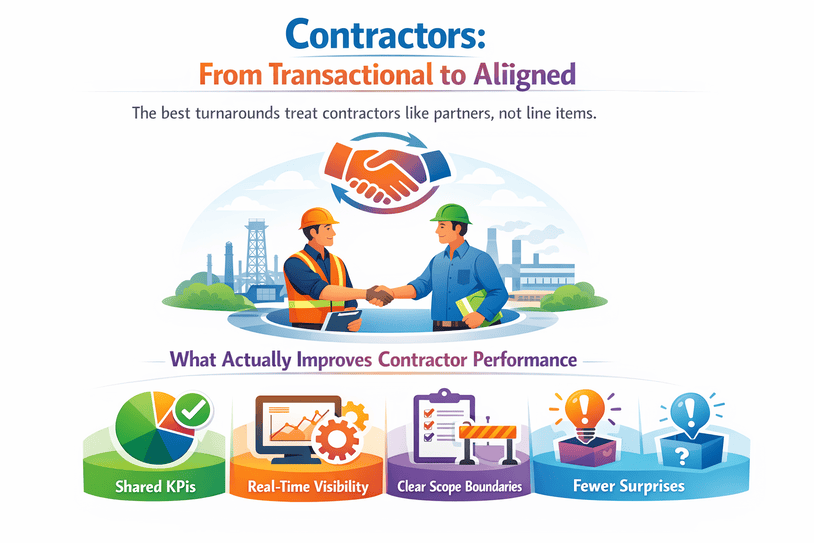
The best turnarounds treat contractors like partners, not line items.
What Actually Improves Contractor Performance
When everyone sees the same data, excuses evaporate.
Waiting for incidents to measure safety is too late.
Modern turnarounds track:
OSHA’s Process Safety Management guidance reinforces early hazard identification during shutdowns
Software won’t save a turnaround if leadership avoids hard decisions.
What it will do is make misalignment visible.
That’s uncomfortable. It’s also necessary.
| Metric Type | Old View | Modern View |
|---|---|---|
| Schedule | End date | Critical path stability |
| Cost | Final spend | Cost variance trend |
| Safety | Incidents | Risk exposure |
| Reliability | Startup | Post-startup run length |
Not because it’s trendy—but because the old way costs too much.
A refinery turnaround is a planned shutdown where equipment is opened, inspected, repaired, and restored so the plant can run safely and reliably afterward.
Old models struggle because of poor front-end loading, weak scope discipline, and late decisions, which drive schedule slippage, cost overruns, and safety exposure.
Stronger front-end loading, clear scope ownership, and disciplined scope freeze reduce late changes, protect the critical path, and give leaders earlier visibility into risk.
Predictive maintenance focuses work on the highest-risk assets and can cut maintenance costs by up to 25–30% while reducing downtime and improving uptime.


